If Your Roof
Leaking Screws on Solid R-Panels
Panels feel firm and any rust stays on the surface away from the eaves.
Start WithFastener and Lap Repair

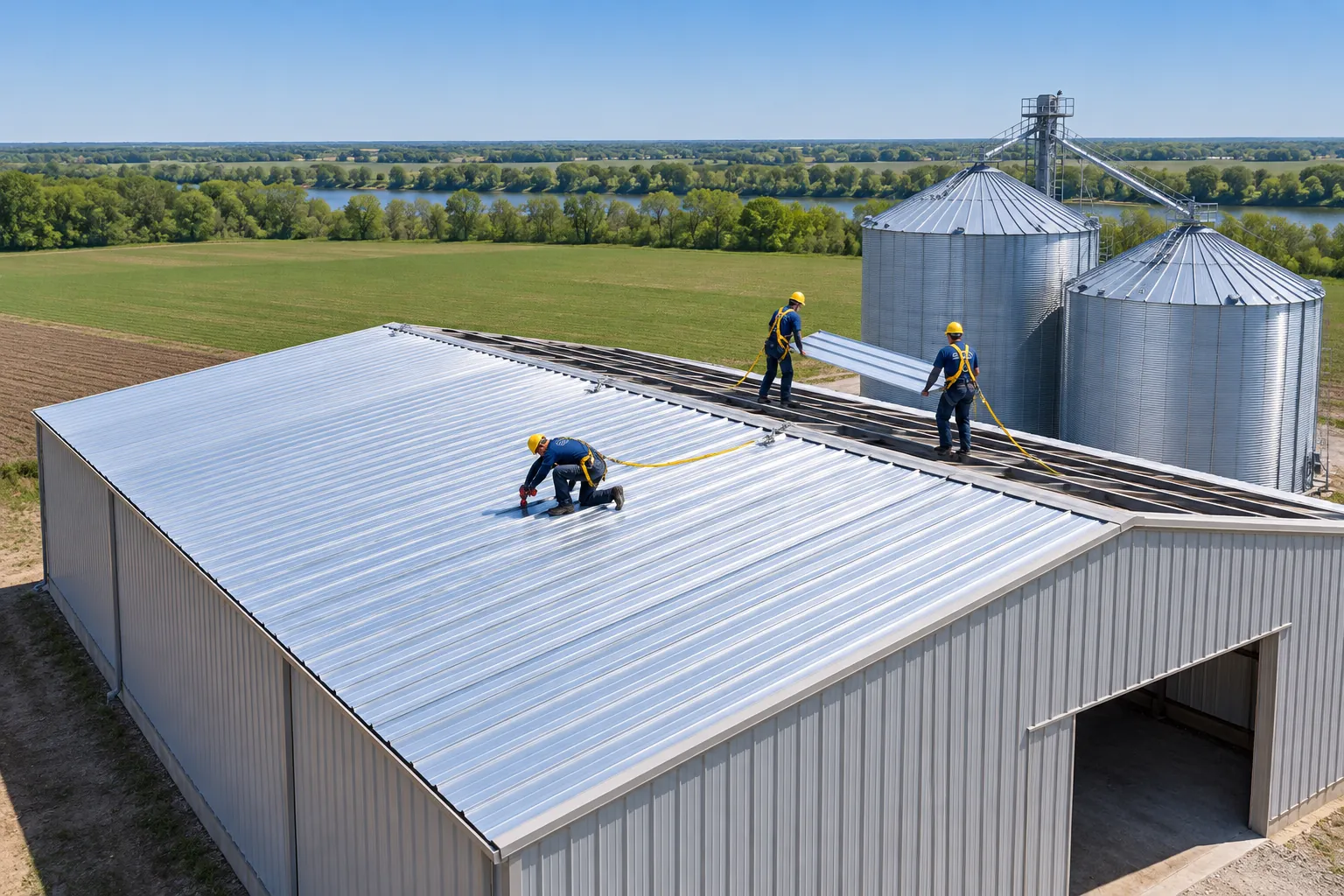
Call a Paducah commercial metal roofing contractor to install standing seam or R-panel roofs, repair leaking fasteners and laps, and keep shop and plant roofs watertight.
As a Paducah commercial metal roofing contractor, we place each building in one of these four situations before recommending new panels or repairs.
Panels feel firm and any rust stays on the surface away from the eaves.
Steel has thinned through where water sits at the panel ends.
The structure can carry framing that builds a new slope above it.
Water runs inward to drains instead of off the eaves.
Older steel roofs leak at a handful of predictable parts. The first one below causes most metal roof service calls we get.

Steel panels grow and shrink with every hot afternoon and cold night, and that movement works exposed screws loose over the years. Once a rubber washer cracks or a screw backs out, rain runs down the shank onto the purlin and drips from the panel underside.
Usually Means: New larger-diameter screws with fresh sealing washers.
Butyl tape at the panel ends dries out, and wind-driven rain backs up through the lap.
Hail, limbs and boots dent ribs and punch holes that call for a panel of the same profile.
Wind loosens trim fasteners first, and the foam closures behind the cap fall out.
Condensation from torn insulation facing or a vapor retarder gap shows up as drips on dry days.
Panel type, gauge and finish are the three choices on a new commercial metal roof. Here is where each one fits.
| Choice | Option | Where It Fits | Watch For |
|---|---|---|---|
| Panel | Standing seam | Offices, schools, lower-pitch retrofits | Higher upfront cost; seams and trim to check |
| Panel | R-panel | Shops, barns and warehouses | Screws, washers and end laps need upkeep |
| Gauge | 24 gauge | Longer spans, roof traffic, hail | Heavier panels to lift and stage |
| Gauge | 26 gauge | Budget shop and farm buildings | Less stiffness between purlins |
| Finish | PVDF (Kynar) | Color hold and chalk resistance | Higher cost than SMP |
| Finish | SMP or bare Galvalume | Shops, farm and utility buildings | Trim and fasteners matched to the panel |
Trim, ridge caps and fasteners get the same finish rating as the panels, so one part never rusts or fades ahead of the rest of the roof.
What new panels or a proper repair change on the roof, under it and in the upkeep budget.
Standing seam panels hold on hidden clips under raised seams, so the only exposed fasteners sit at trim and penetrations.
Fresh butyl tape and stitch screws at closer spacing close the end and side laps where older panels let water in.
Replacing cracked washers and rusted eave sections stops the drips that land on equipment, feed and stored stock below the panels.
Torn insulation facing and vapor retarder gaps behind the drips get repaired, so morning moisture stays off the floor.
New panels and trim match the original rib profile, gauge and finish, so a repair blends in and wears at the same pace.
Two roof walks a year catch a loose screw or cracked sealant around a pipe boot before it soaks the insulation.
Call us and describe where the drips land inside. Loose fasteners and dried-out laps are usually a repair, and catching them early keeps the purlins dry.
New panel installs and repair jobs follow the same order, from the first roof walk to the last trim screw.
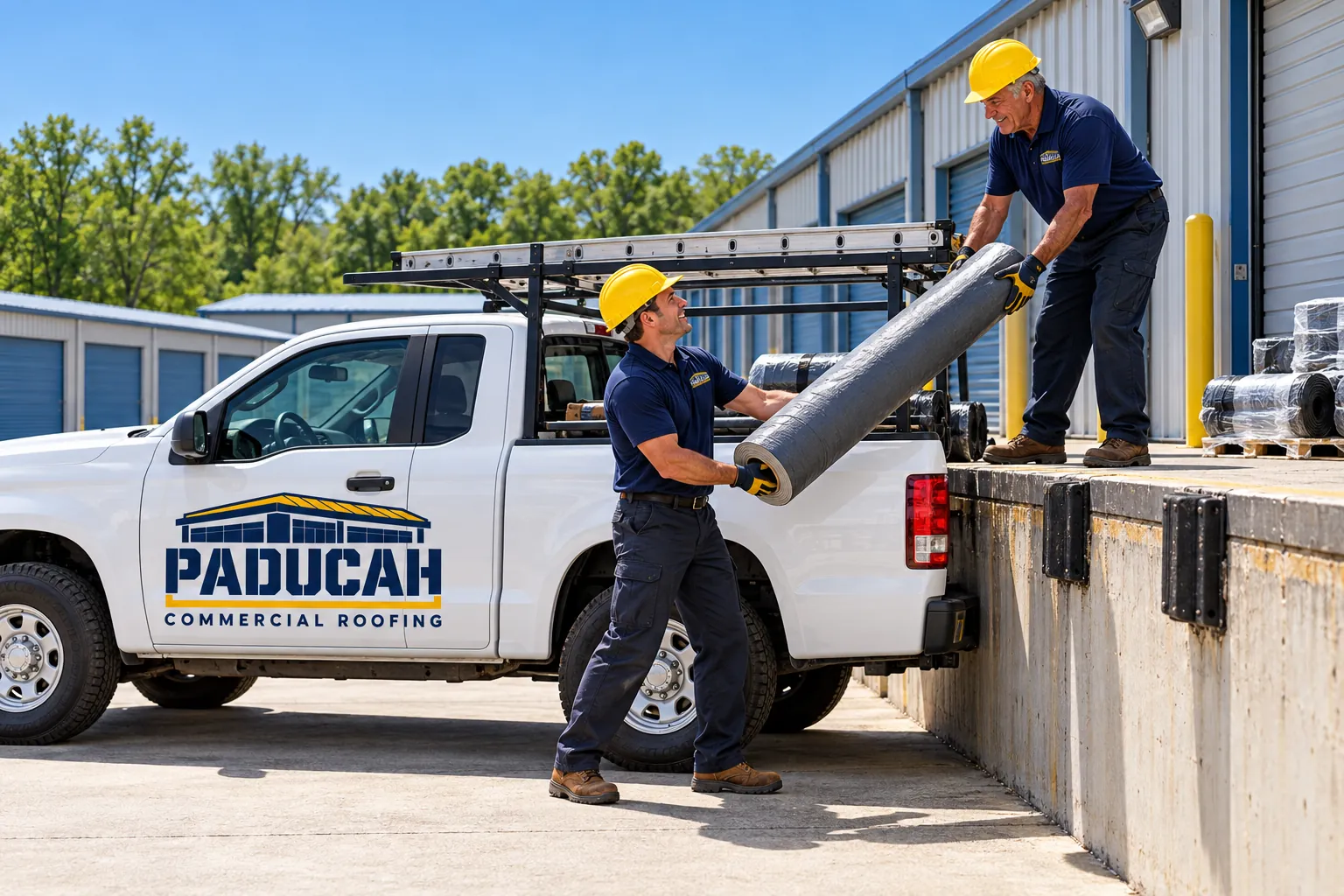
We walk the panels, check screws and washers by hand, look at end laps, eaves and curb flashing, and view the purlins and insulation facing from inside the building.
Pitch, span and how the building is used decide between standing seam and R-panel, 24 or 26 gauge, and a PVDF, SMP or bare Galvalume finish.
Retrofit jobs add light-gauge framing over the old flat roof once an engineer checks the load and the building office signs off; repairs start by cutting out rusted sections.
Panels go on with clips or screws at the spacing the maker lists, with butyl tape at every lap and closures at the eave and ridge.
Ridge caps, rake trim, curb flashing and gutters go on last, metal shavings get swept off, and we walk the finished roof with you.
Metal roof jobs often connect to one of these, depending on the pitch and the rest of the building.
Single leaking laps, cracked washers and dented panels get repaired in place with matched parts.
Commercial roof repairLow-slope sections attached to a metal building need tapered insulation and a new membrane rather than panels.
Flat roofing in PaducahPlant buildings that mix metal panels with membrane roofs over process areas get both handled in one plan.
Industrial roofing in PaducahOwners of shops, plants and farm buildings ask these about metal roofs. Each row shows the short answer.
Standing seam hides its fasteners under raised seams, on clips that let panels slide with heat, while R-panel is screwed through the face with exposed screws and rubber washers. R-panel costs less upfront and fits shops, barns and warehouses. Standing seam handles lower pitches, costs more, and suits offices, schools and buildings where fewer holes through the roof matter.
Yes. Light-gauge steel framing fastened to the structure builds a new slope above the old membrane, and metal panels go on top so water sheds off the eaves. A structural engineer checks the added load first, rooftop units get new curbs or move to the ground, gutters go on the new eaves, and vents keep the space between roofs dry.
Most commercial panels come in 24 or 26 gauge steel, and 24 gauge is thicker and stiffer for long spans, foot traffic and hail. PVDF paint, sold under names such as Kynar, holds color and resists chalking.
SMP costs less and serves shops and farm buildings, and bare Galvalume fits utility buildings. Trim and fasteners need a finish that lasts as long as the panels.
Each leak gets fixed at the part that failed, using pieces matched to the panel profile, gauge and finish.
Backed-out or rusted screws give way to larger-diameter screws with new washers, open laps get fresh butyl tape and closer stitch screws, and holed panels are swapped for the same rib profile. Steel rusted thin at the eaves gets new panel sections.
Plan a roof walk each spring and fall, plus one after hail, high wind or an ice storm. Clear gutters and valleys, check fasteners for backing out or crushed washers, look for cracked sealant at pipe boots, curbs and skylights, and refasten loose ridge caps and rake trim.
Sweep away metal shavings left by HVAC service before they leave rust spots.
Tell us about the building, the panel type and where water shows up inside. We will walk the roof and give you a free estimate.
Want A Call About Your Roof?
Leave your name and number and we will call you back about the roof.
Or call now: (618) 386-4443